
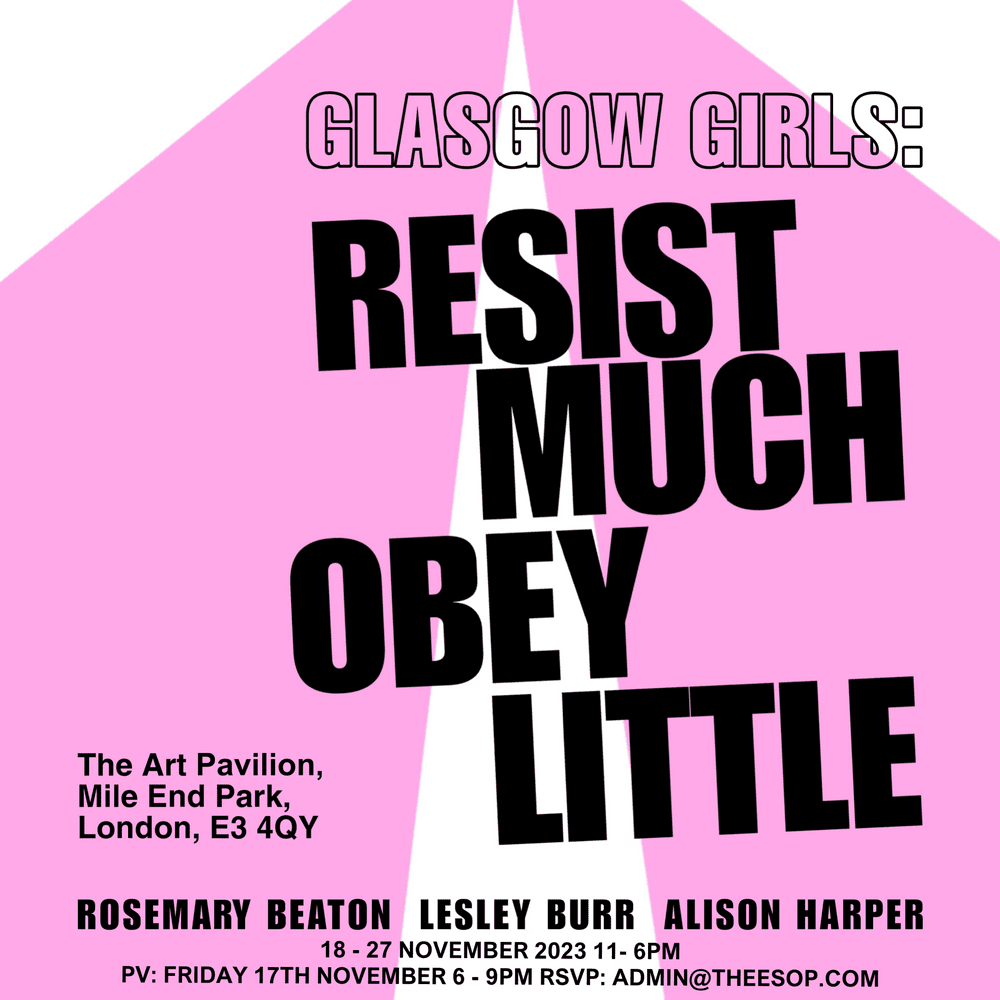
GLASGOW GIRLS
Resist Much, Obey Little
Rosemary Beaton | Lesley Burr | Alison Harper
Nov 2023. Arts Pavilion, Mile End Park, London E34QY
The Glasgow Girls… a Herstory:
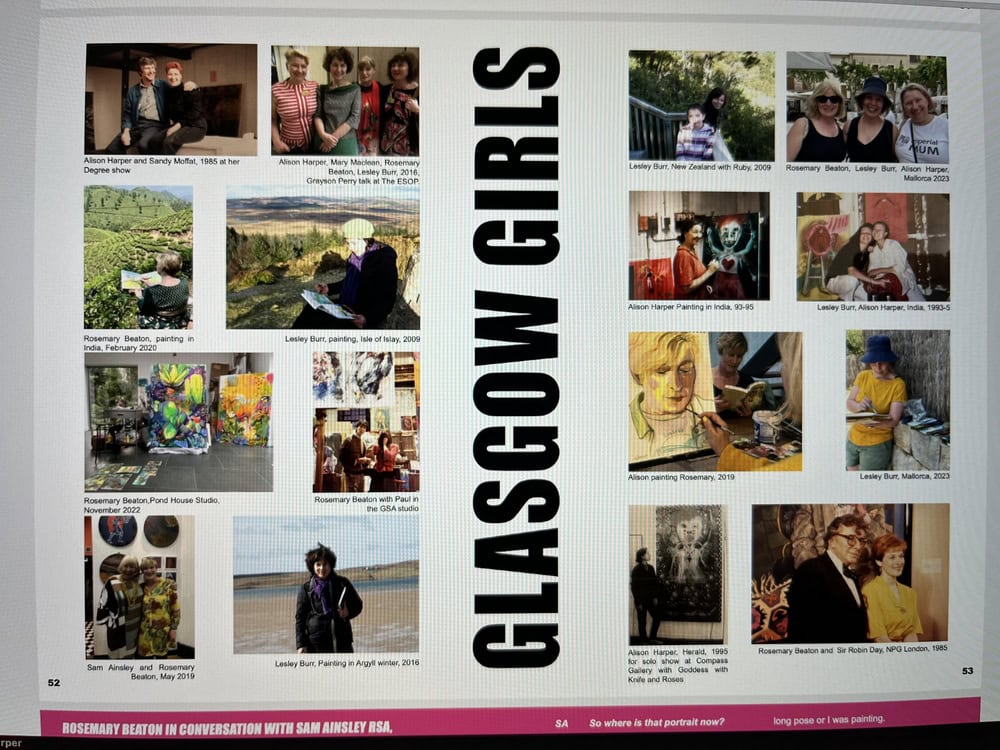
Friends for over forty years since joining Glasgow School of Art as teenagers in 1981, Rosemary Beaton, Lesley Burr and Alison Harper have exhibited numerous times individually and in various combinations since 1987. They were first brought together under this title by Agi Katz of the Boundary Gallery, London after she saw an article “Here come the Glasgow Girls” in the Independent newspaper in 1987. They and others were emerging from GSA a couple of years after the Glasgow Boys; Adrian Wiszniewski, Ken Currie, Stephen Campbell and Peter Howson and more who were gaining national and international attention in the mid to late eighties as part of and leading a resurgence of figurative painting.
The three have subsequently exhibited in various combinations with other artists such as Debbie Lee and Helen Flockhart at the Boundary Gallery, London on five occasions from 1987 to 2005, also having shows in Glasgow, Orkney, Shetland, Leicester City Art Gallery and Stirling Museum. They have shown in public and private galleries and self-organised several large exhibitions such as “Venus Flower Basket” in 1997 where they invited 8 other artists to show with them in a massive empty department store in
Glasgow.
The title of the show ‘Resist Much, Obey Little’ is a line from a Walt Whitman poem. This title appealed to them as it echoes a bid for freedom, for individuality, so you might be outwardly tethered but inwardly free, a nod to the struggle of combining worldly responsibilities and creative work.
The three artists are part of a generation of women painters from the eighties – juggling making artwork, motherhood and paid work in teaching and public art projects in the case of Lesley and Rosemary and establishing an Art School as with Alison. They have many subjects between them but a constant presence is the power of colour, nature, the small moments of patience and attention that make up a life, family life and reaching for that internal space and freedom. The universal can be expressed in the personal and what were often in the past described as lesser ‘feminine’ subjects; ‘the domestic sphere’, connection both with nature and community – are however deeply important – aligned with every significant theme: love, death, the fleeting nature of our existence- these things can be expressed in the simplest of subjects. The three painters are united by friendship, shared history and a deep love of painting and drawing.
Painting and especially figurative painting has until recently, been out of fashion since the nineties. A renewed interest in figurative painting has taken hold, particularly since the Radical Figures exhibition at the Whitechapel Gallery, London in early 2020. The Pandemic sealed the deal as it were, when people came blinking into the sunlight they craved human connection and figurative painting has been firmly in favour again with major galleries and museums showing narrative and figurative work. It is a pleasure to be exhibiting again in London when there is currently a renewed broader interest in painting and visual story-telling. We hope you will visit the show and enjoy work characterised by an unabashed range of human qualities: lively, poetic, controversial, entertaining, humorous, sexy, dark, spiritual, celebrating quiet moments and loud ones.
We hope you enjoy the life, the colour and some sublime drawing! Alison Harper 2023.

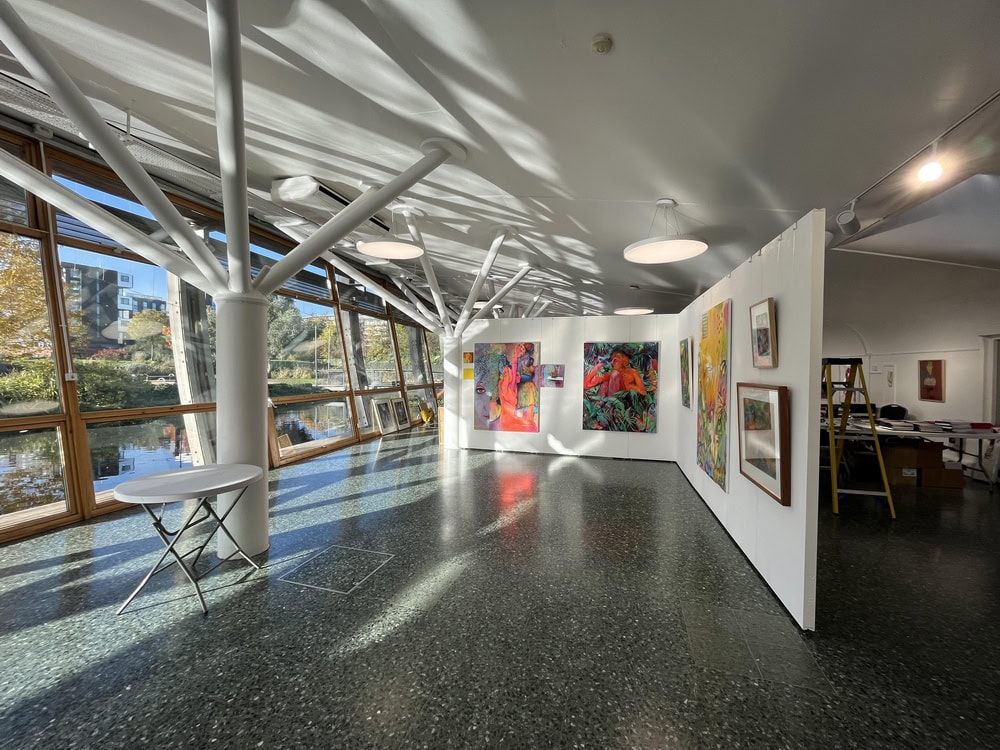
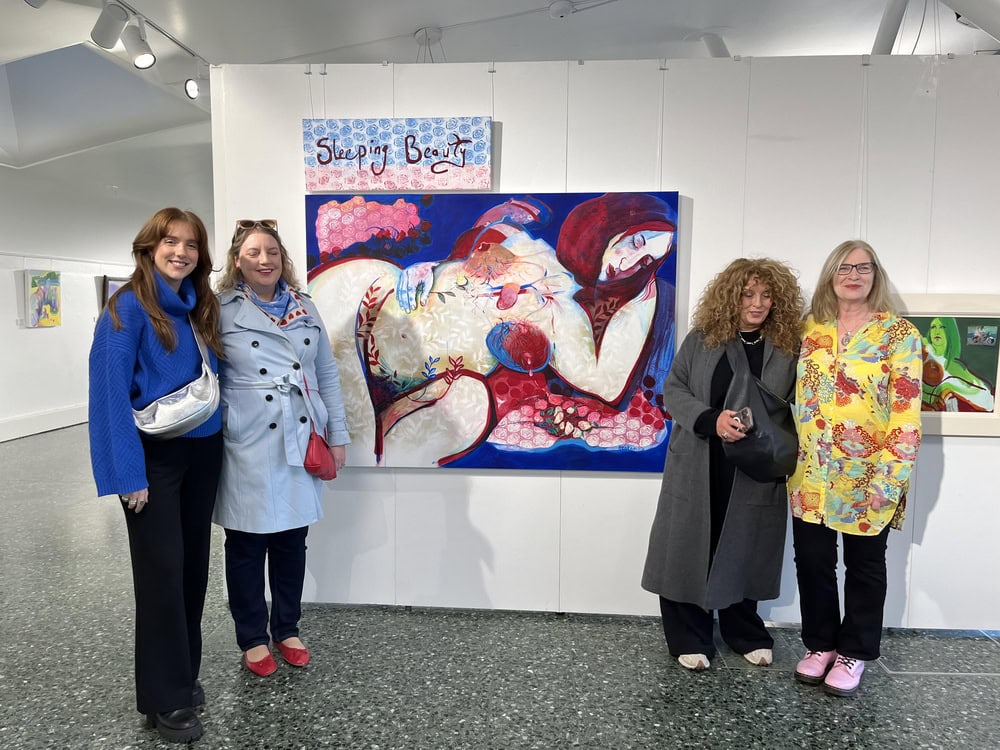
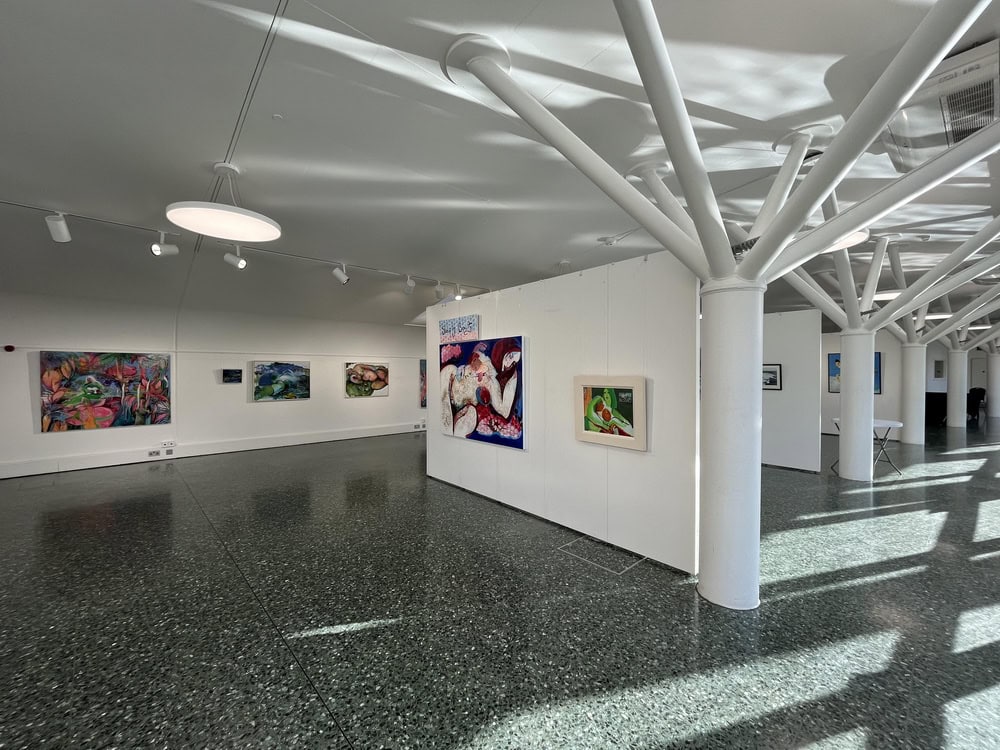
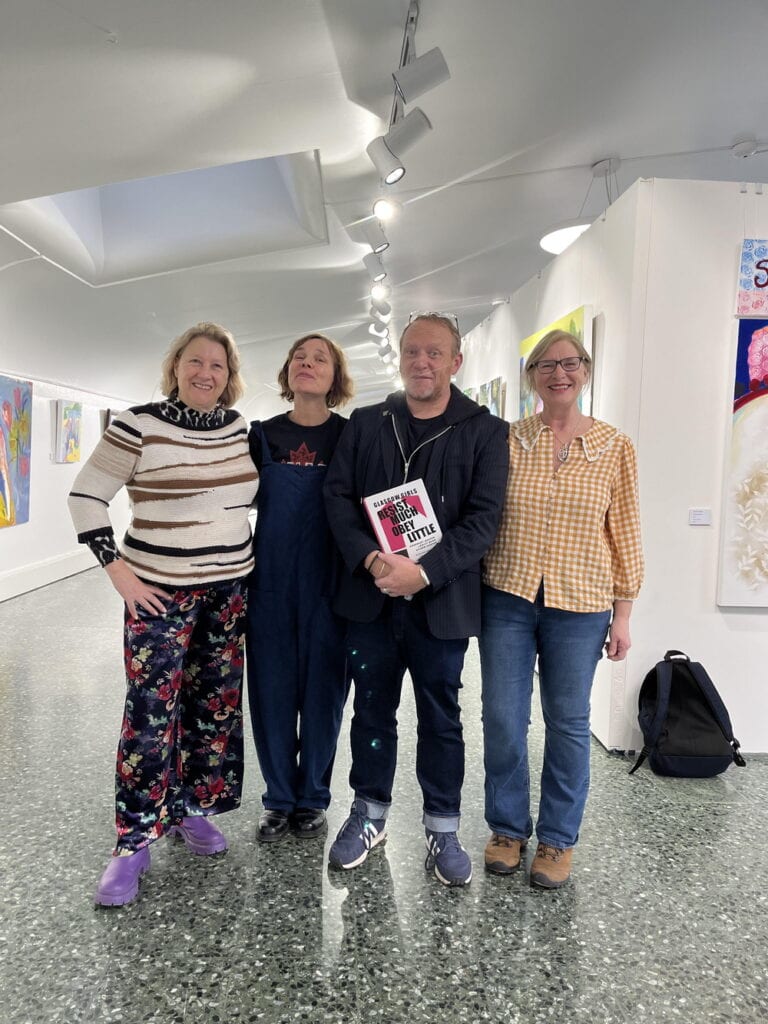
Kinhin
Essay by Colin R Greenslade - Director Royal Scottish Academy:
Kinhin (a sutra) – stitched together; to walk as if thread through a loom; a walk, to and from
Life throws things at us. Life is what we do. We live it in a series of vignettes. Some periods are lengthy and recurring. Other passages are brief and fleeting. Emotional, painful, joyous, mundane, loving – the list is as endless as the experiences we encounter. It is said that we are born alone and we die alone – rites of passage which we face on a personal and intimate level. Yet in between these moments, we have the opportunity to fill this life with as rich a tapestry as we can imagine…
Most of us will weave this living with colour. Colour affects our every waking moment and illuminates the dreams of our slumber. Colour for our moods and emotions; our sense of place and belonging. Sometimes, the warp and weft of our lives takes us on a journey and, as we travel through time itself, we share the voyage in tandem with others. These can occur as brief instances, series of reacquaintances, or years where we are wholly immersed in one another. A myriad of gossamer threads uncut and adjoining us to the same souls.
This exhibition of works by Rosemary Beaton, Lesley Burr and Alison Harper, the group of artists whom have long been referred to as ‘the Glasgow Girls’, is a connective story from its origins to today. Firm friends as students at Glasgow School of Art and graduating in the mid-eighties, these artists have travelled different paths which have taken them on similar routes and have continually brought them back together in friendship and opportunity.
Their coming-together within their careers has a pattern of ebb and flow, always in support and never in opposition. That thing we call ‘life’ has taken them in diverse directions and spread their locale UK-wide. The everyday has been so vital – family, motherhood, income. Yet there is still a constant drive to create – to communicate their experience of the world around them through the language of drawing and painting. Time and time again though, these artists have maintained their connection, revisiting their friendship bonds through calls, visits, painting trips, retreats and exhibitions.
They tell a tale of the dance of time. Separate lives intermingling, encouraging and affecting one another towards achieving a similar and greater goal. Celebrating and supporting their individual achievements and offering opportunity to each other and to a wider artist community when it arises.
These artists have been exposed to a system which reveres the lone creative wolf. Making an early name for themselves in a time when the male-dominated art world took its patriarchy for granted. They are also mothers and carers and so it is important to recognise that their careers have had to accept, absorb and disperse the energy required for motherhood and wider caring for family. This nurture extends to one another and is perhaps an important lynchpin for their wellbeing and success. And success it is, these powerful artists with a full understanding of practice at their core and worldy wisdom at their finger tips.
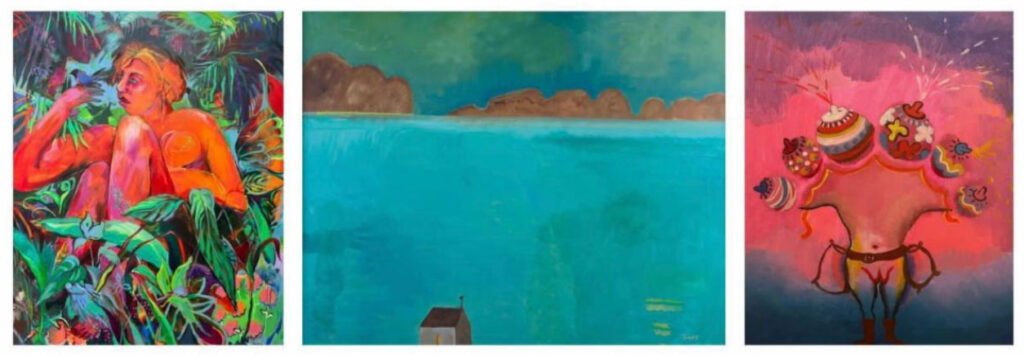
Their individual stories reinforce this status. Rosemary Beaton’s robust painting, with its free lines of drawing and vivid colour, inspire within us an emotional response to life itself. Equally comfortable in the landscape as in the life studio, her works have a gentleness and gravitas which builds with the viewers prolonged gaze. Fruit of the River (2013) shows us an undulating and fecund landscape within which a nude female figure lies in repose. Her face is over-drawn in multiple, changing poses and her three breasts hint at the turn of her body from flat to side-facing. The river flows around and through her, also changing its course over time. Bird of Paradise (2021) bursts with a cornucopia of colour and form. The Strelitzia flowers with their heads in the sun, hot against a fevered yellow wall and their feet in the cool of the vegetation below. This work is a triumph of drawing and colour, a response which gives us a bolt to our senses. The resonant heat; the heady smells; the strength of the searing light. Nudes are also treated with colourful surprise. Andy with a Purple Background shows a muscular, powerful-looking man carefully drawn in rose red, purples and greens – a rendition which accentuates his nakedness and his strength, yet embraces a passivity in subjugation to the artist and viewer. This expansive appreciation of colour and form is carried across her works and has been a mainstay of her career.
Lesley Burr also responds instinctively with colour. Her painting is entirely at home in the landscape and Burr is drawn to areas of wild and empty. Flat tones represent the feeling of place. Colour resonates with strength to convey weather, form, topography and even the passing of time itself. Nature within the landscape is part of the wider picture, the story to be told. Drawing down into the layers of paint and mixed media brings an air of the ephemeral to the plight of the landscapes on view. In Siskin Soulmates, two birds are viewed ‘up-close and personal’ in an arable landscape. The birds are visitors to the painting, stopped for rest amongst the corn and captured as curious witnesses to the windswept and sun-baked vista. The scene is empty of people yet touched by man – as depicted in the hut on the horizon. Human impact upon landscape, and indeed climate, has become a recurring theme in her work. Recent trips to the Arctic, including as Artist in Residence with the Scott Polar Research Institute, has enabled Burr the opportunity to explore the change of landscape and the impact to an eco-system which depends upon a stable climate to cling onto existence. From ice-fields to expanses of water, we see the earth’s essential elements laid before us in works such as Luminous Moonlight, a big sky and body of calm water over which the moon dances, trailing her veil and pulling the tides.
Alison Harper’s creative energy is near unsurpassable. Describing herself as having had time away from painting for motherhood and to invest her time in the Essential School of Painting (ESOP), she rather modestly plays down her creative output over the past 20 years. The impact of ESOP cannot be underestimated and this drive and ambition is inextricably linked with her own painting practice. Drawing influence from culture, mythology, theology and sexual politics, Harper’s paintings are grounded in thought and action. Indian deities and everyday women have equal status, perhaps nodding to the goddess within all aspects of womanhood. Within all aspects of humanity. Indeed, the most recent works from the Good Girls/Bad Girls series leans into this realignment of balance in the genders. The women continue to be empowered and there is a melding of the masculine and feminine towards a more harmonious idyll. A future which is not concerned with gender fluidity or non-specific gender but a healthy recognition of necessity for a gender-equilibrium in society in general. In the painting If God Were a Woman, a tour-de-force of bounteous, generous womanhood and all-seeing knowledge (so many eyes!.. everywhere!!) there is a wry humour and striking confidence. Here is an artist who knows herself, the importance of her message and the achievements (and indeed wisdom) which she has distilled on her journey so far.
This exhibition, like many others which have preceded it, is also self-driven. These artists have taken it upon themselves to arrange and deliver this show for a London public. Their determination to write their own story is fierce. This attitude of artists ‘making things happen’ is very strong in Scotland, from artist-studios and workshop provision through to the artist-collective initiatives and artist-led galleries, Scotland punches above it weight in this coming-together of creative minds to form a hive of self-directed activity. Therefore, this flourish of some significant importance follows a ‘weel-kent’ (Scots – ‘well known’) tradition. London is where Harper has her career and studio, therefore her home neighbourhood, with its connection to the wider metropolis, is a natural opportunity for her artist circles. London has witnessed the Glasgow Girls before and will witness them again, for sure. We must all take note, celebrate and enjoy what they are showing us whilst we can. During our fleeting time in the great tapestry called ‘Life’, colourful visions of this strength burn so brightly and the joy they bring us is endless.
Colin R Greenslade
