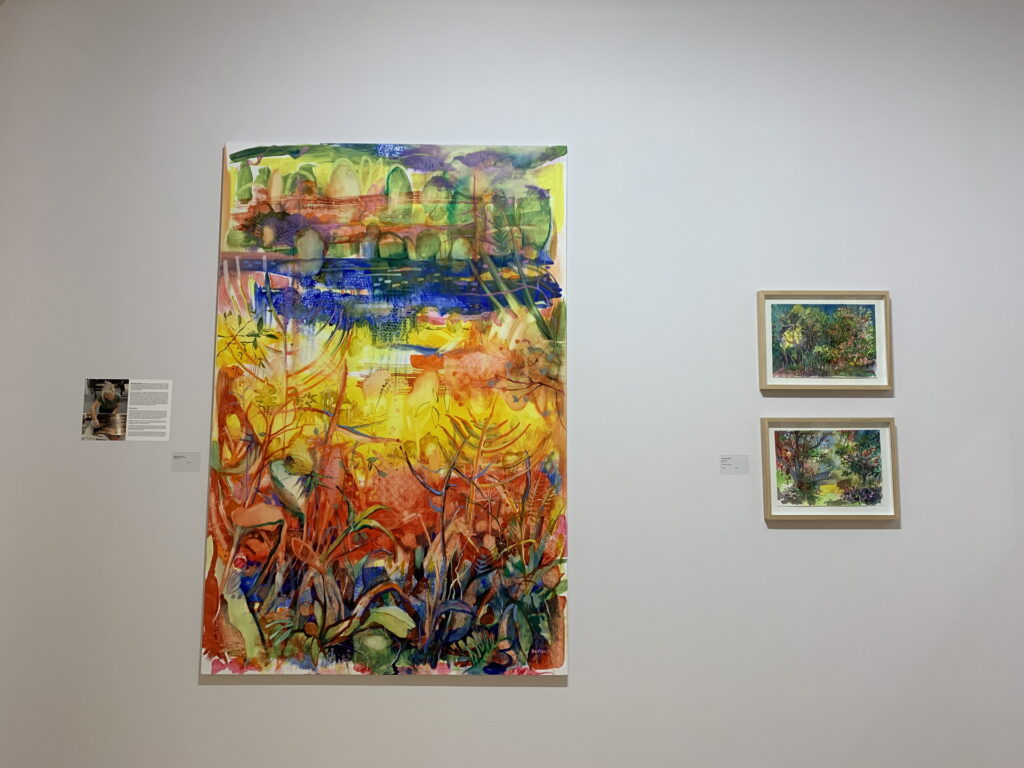
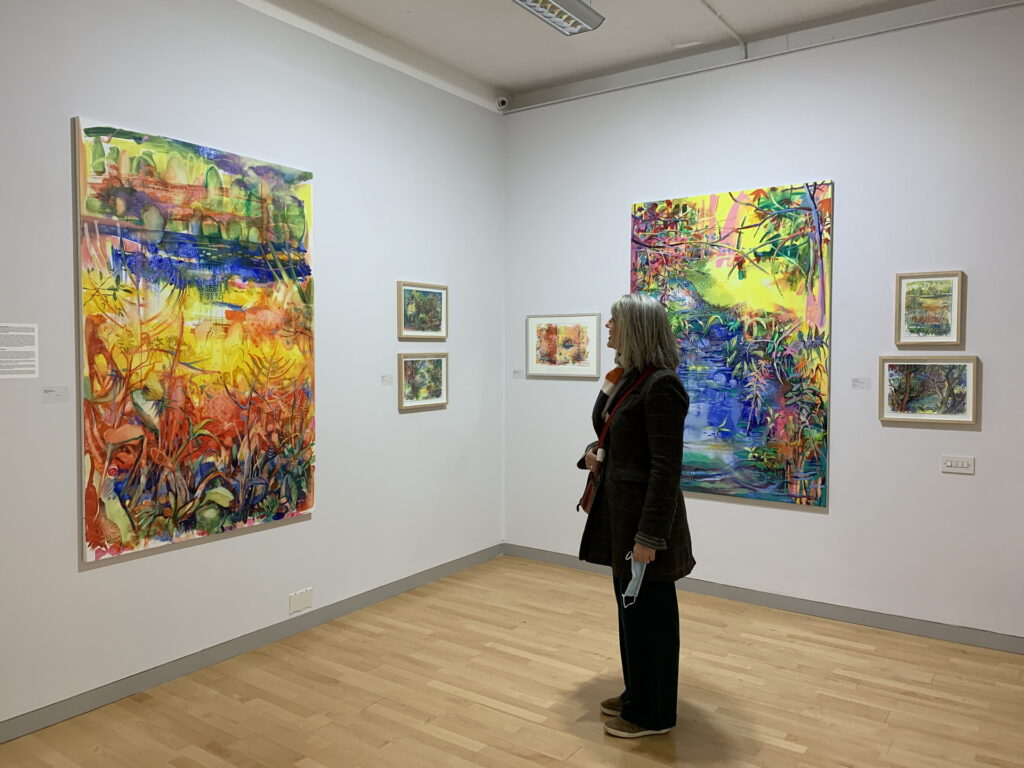
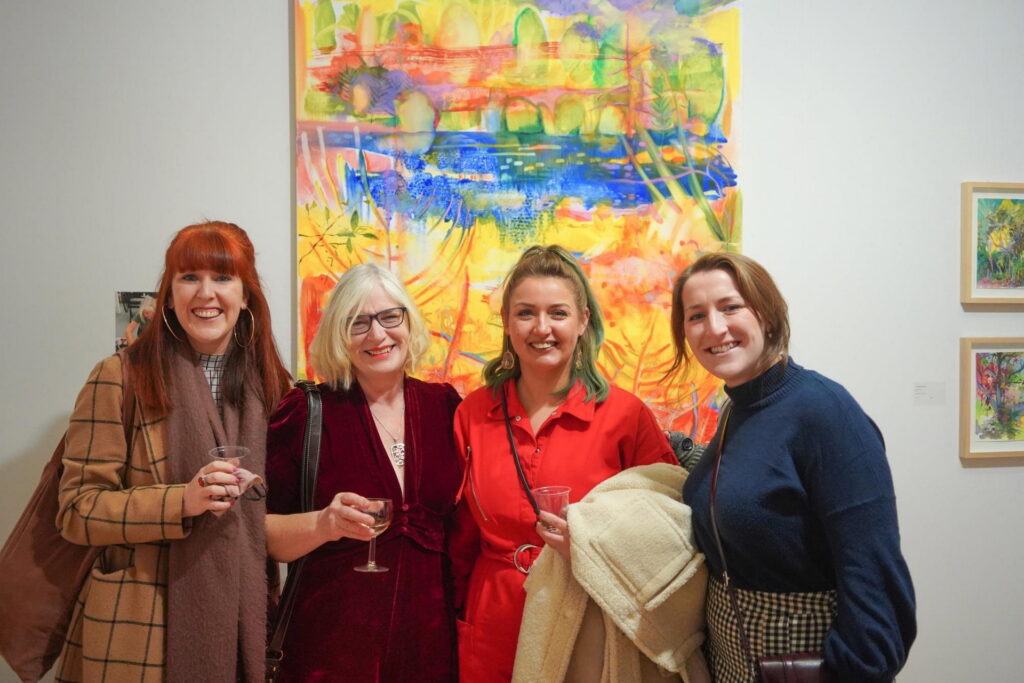
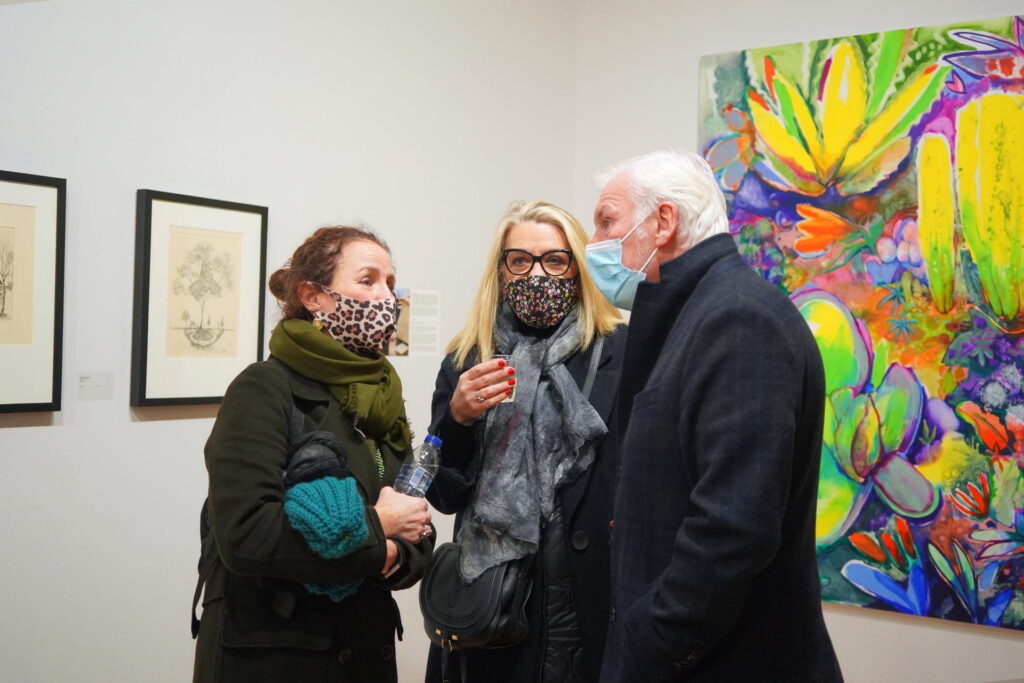
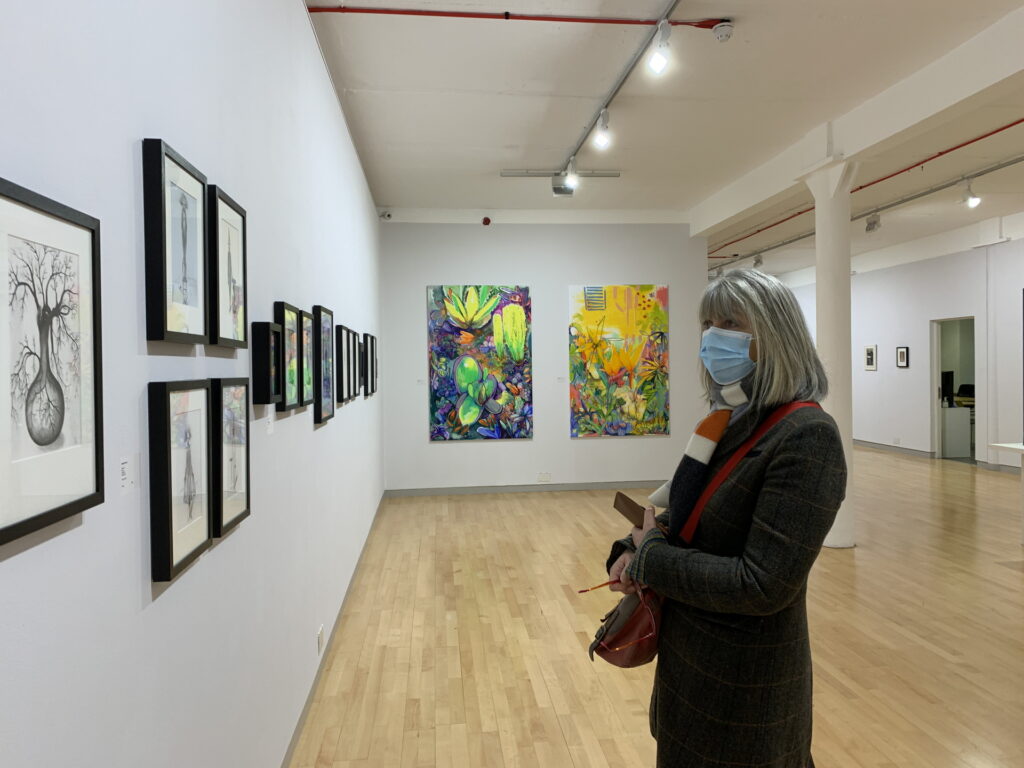
“We bathe in the tropical colour fields and deceptively unbound mark-making of Rosemary Beaton, whose joyful and fluid paintstrokes are underpinned by rigorous form and a deep mastery of line & form. Coupled with a joyful colour palette, we enter a shimmering colourscope.”
Claire Forsyth 2021
(Read the full article at the foot of this page.)
5@GPS
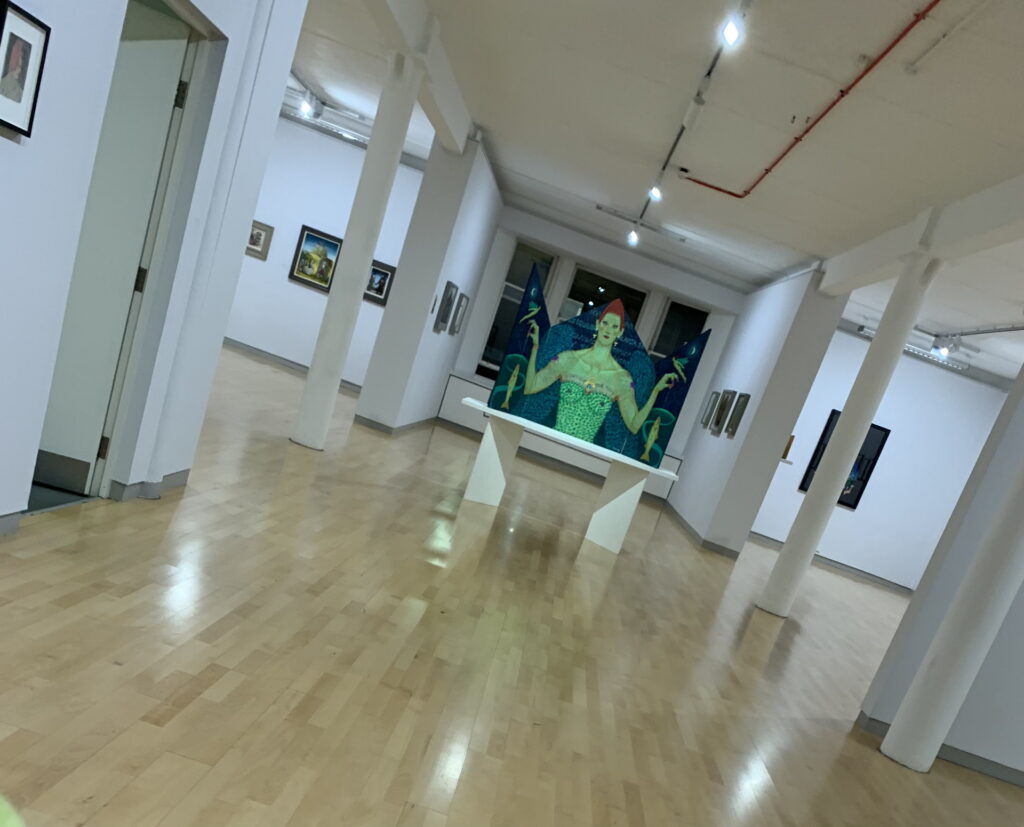
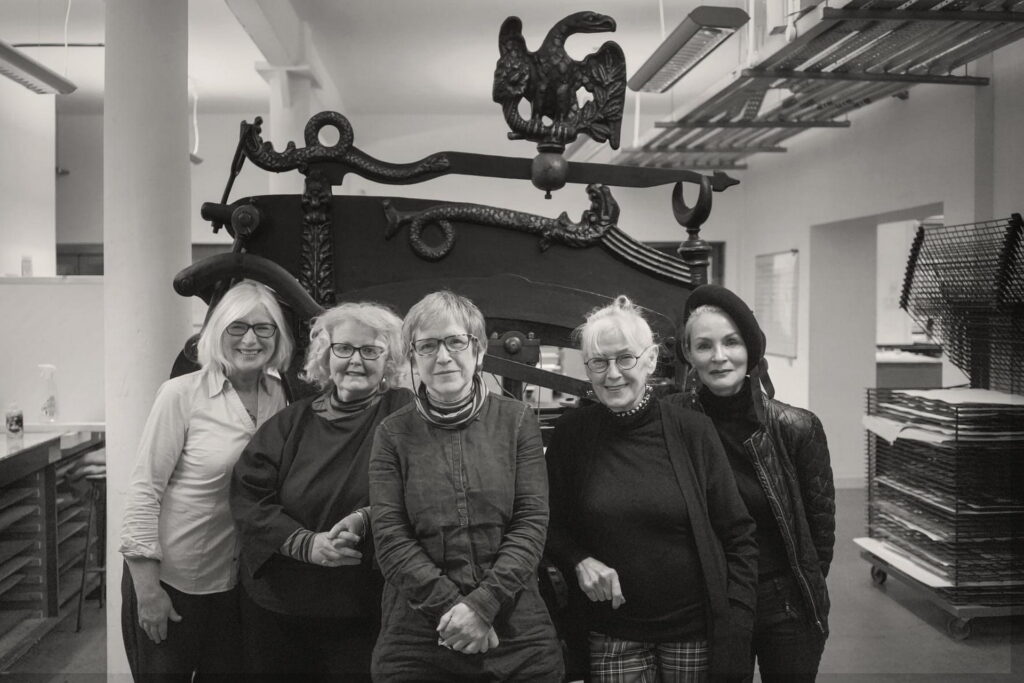
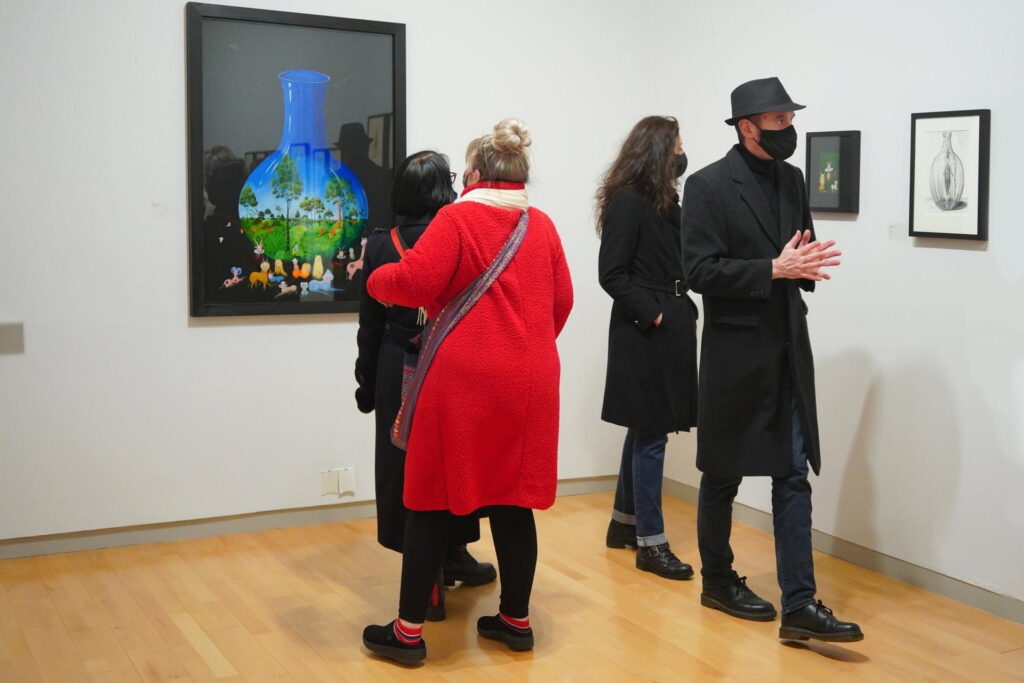
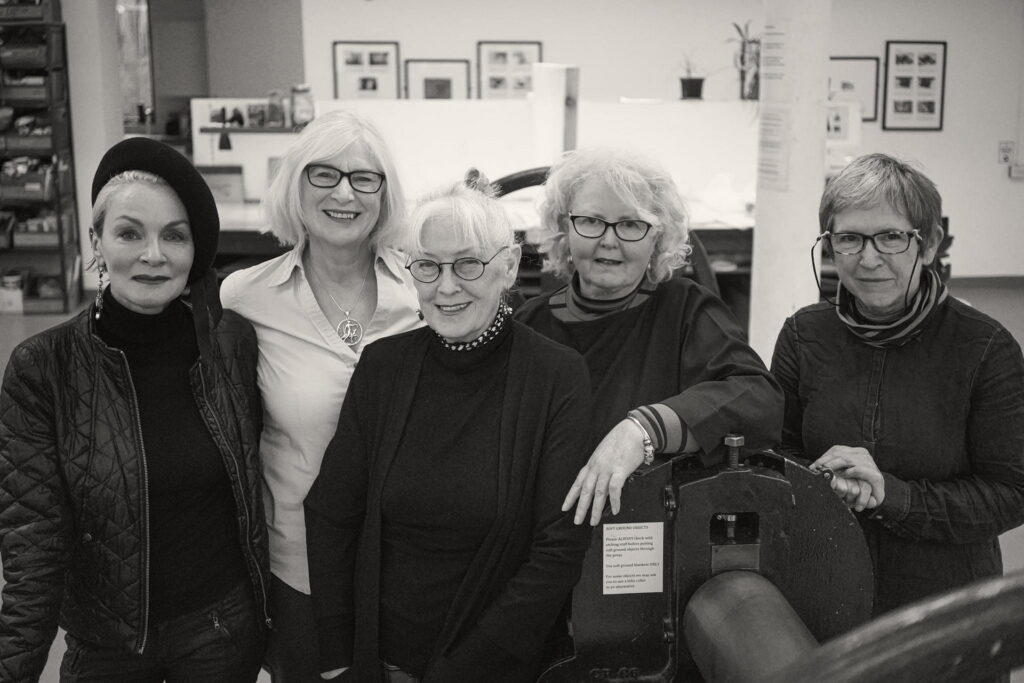
A survey of five painters working at the height of their powers, very different in style and subject but each devoted to a sincere investigation of the medium and committed to a deep internal world & language, with it’s own mythology, symbolism and landscapes.
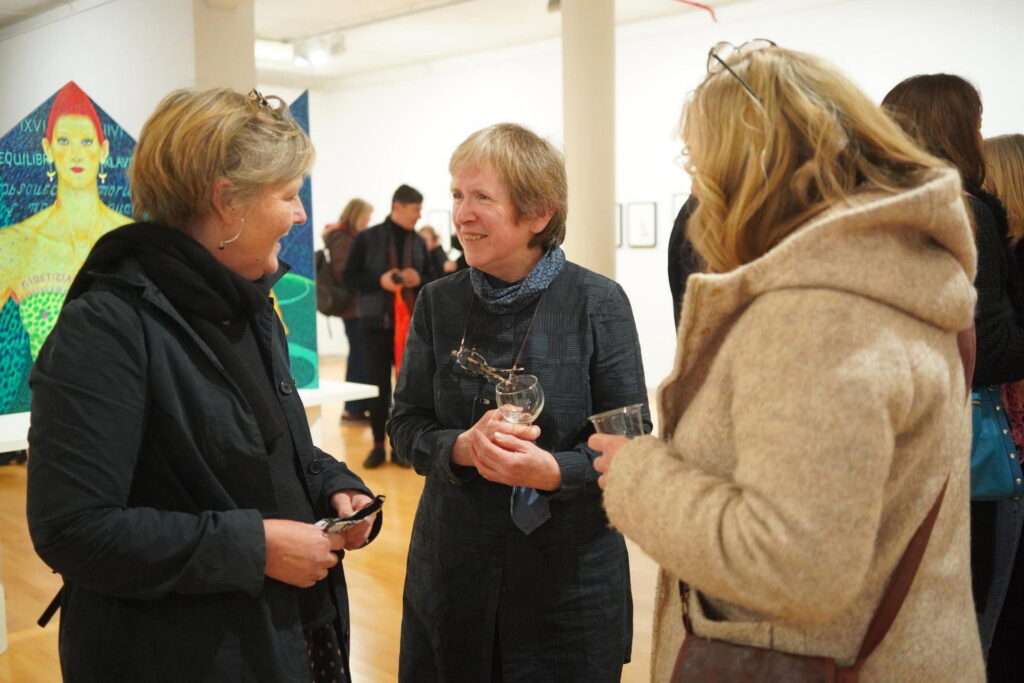
In this broad collection we see work that was made before & during the pandemic, a time of uncertainty and isolation, leading many of us to retreat to inner worlds and to search out beauty and connection. We feel the bonds of collaboration, friendship & respect that tie both these artists and the work together.
We bathe in the tropical colour fields and deceptively unbound mark-making of Rosemary Beaton, whose joyful and fluid paintstrokes are underpinned by rigorous form and a deep mastery of line & form. Coupled with a joyful colour palette, we enter a shimmering colourscope which as Beatrice Collins says is “flamboyant but never frivolous. …think Egon Schiele on acid”.
Viewers pass through the looking glass into the polished and sometimes eerie world of Alice McMurrough. Measured brushwork rounds out a cast of protagonists who inhabit a fully formed world, at once beautiful but unsettling. We fall headlong into a narrative studded with symbolism, where Joan of Arc stands strong even whilst spiders creep across cheeks towards gently glistening eyes.
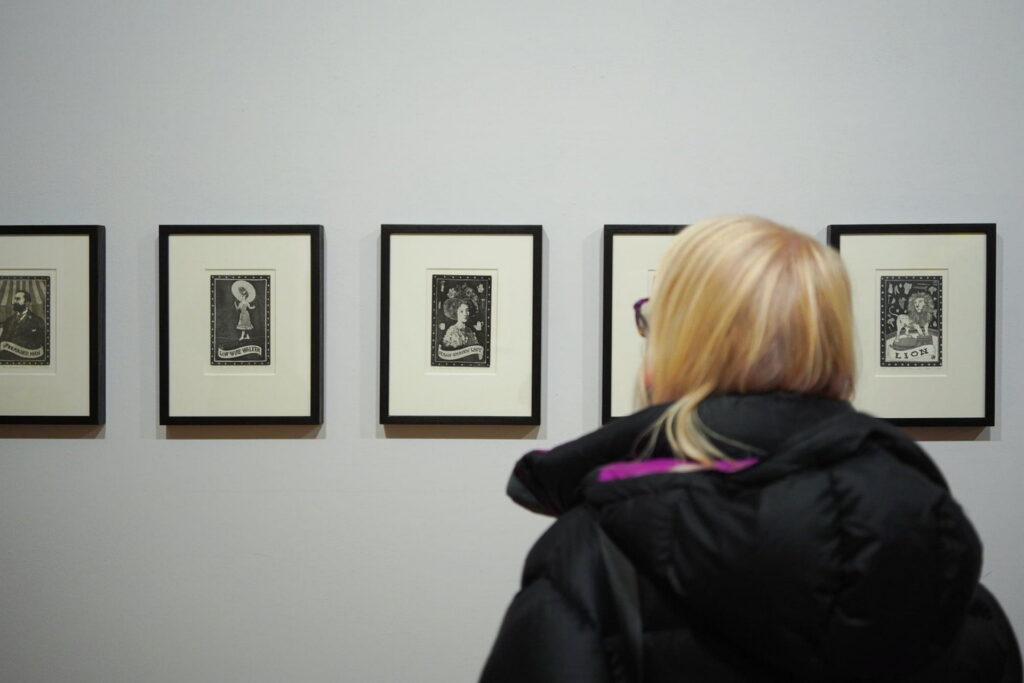
Helen Wilson takes us to a more familiar world, but the parts we rarely notice or see; an opera singer caught in the light of the orchestral pit, a ballerina at rest, the patina of shoes worn by famous writers and artists; the outer trappings of people whose inner narratives and landscapes we spend time in. She is the artist as observer, both of others and herself, with an approach that is as lighthearted as her skill as a painter is serious.
Symbolism threads the landscapes of Heather Nevay’s figurative paintings, where figures, buildings and vases are painted with the exquisite precision reminiscent of a Mughal miniaturist. We sense the interplay between the containment and release of emotions in the vessels and figures within the plane, drawn in by jewel like colours and a deep sense of a sense of other.
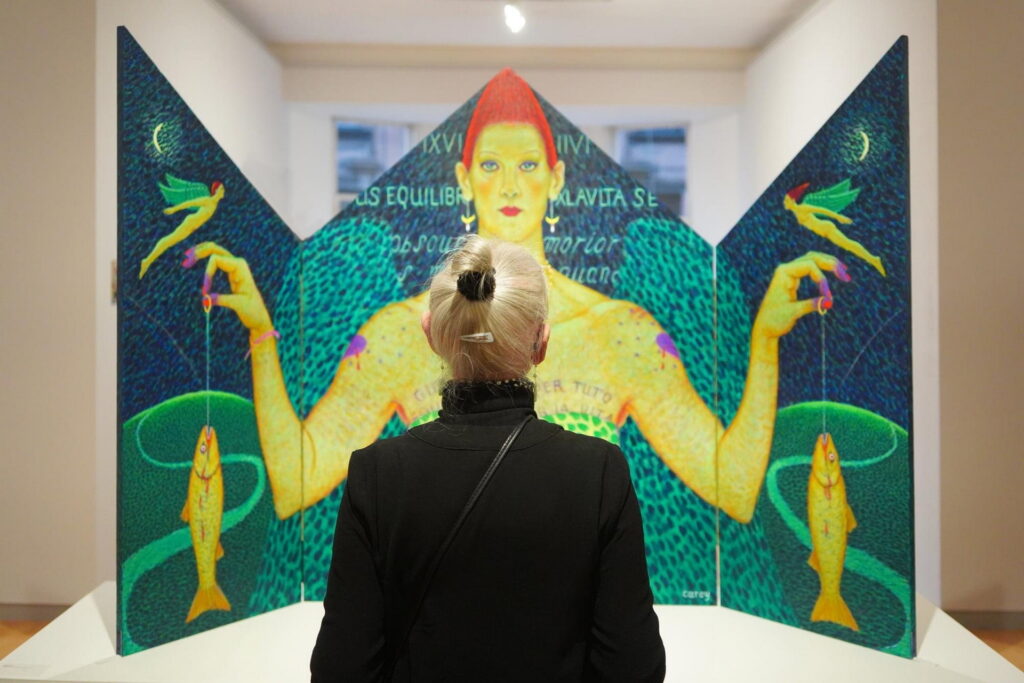
A deep exploration of June Carey’s own dreams & subconscious thoughts through prolific drawing, painting, printmaking and 3d work, give us a glimpse into a world rich with searching, symbolism, icons and mythology. The thread of Carey’s essence is embedded within every image, and it is drop of this elixir that has brought these five artists together.
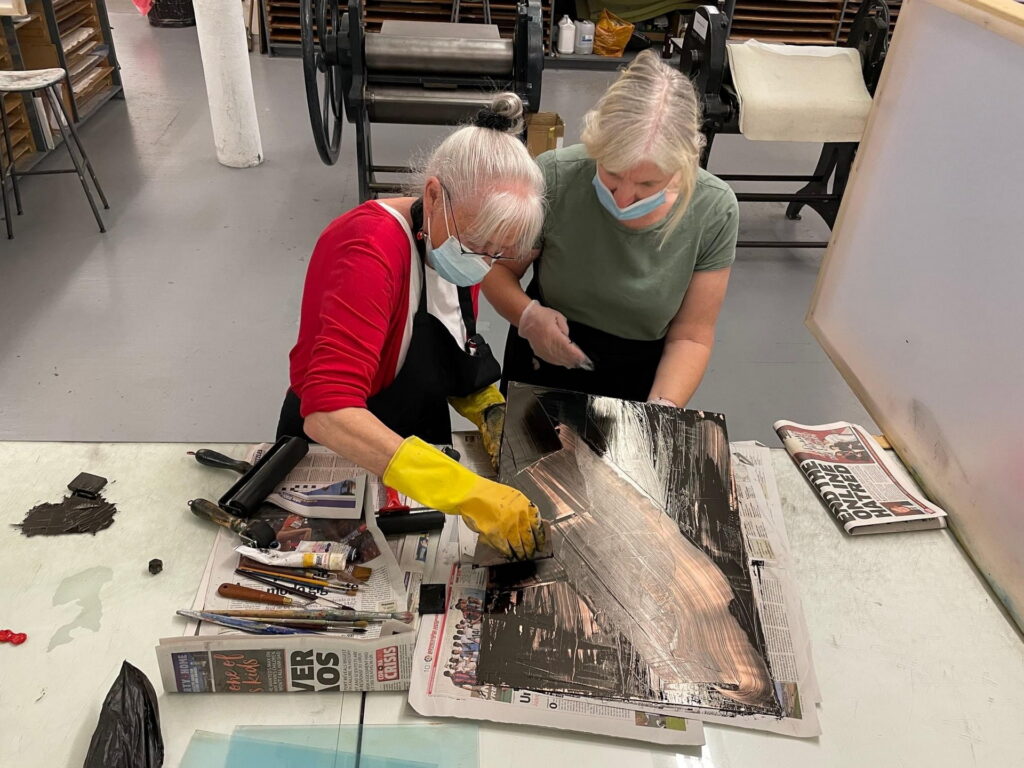
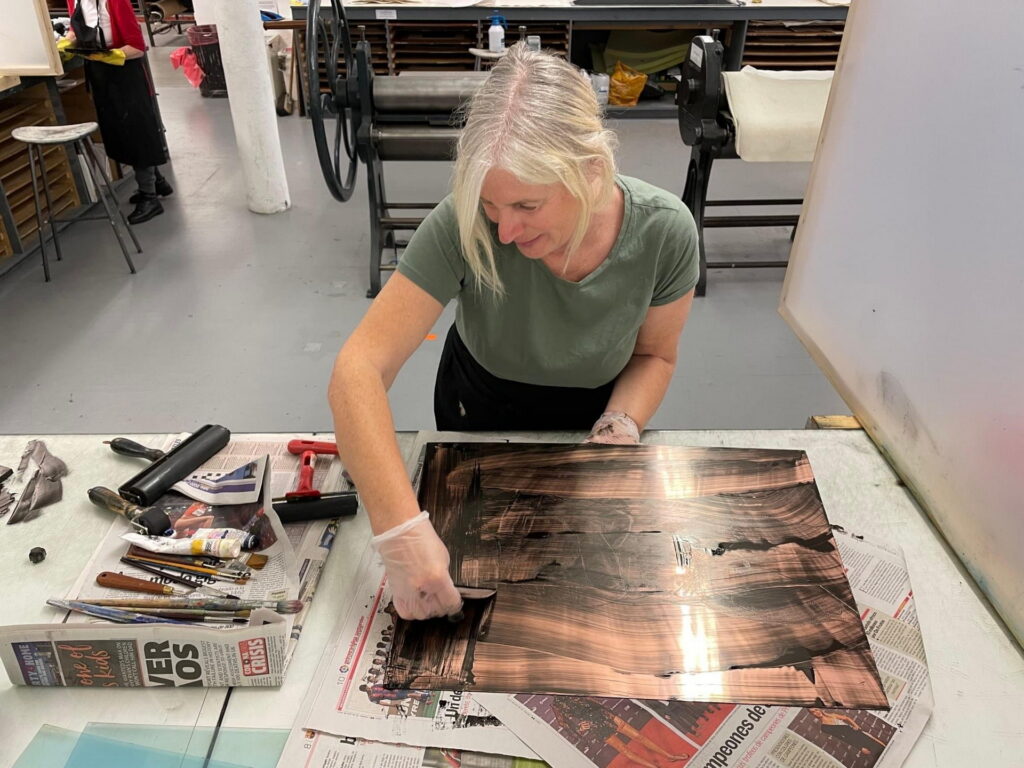
All established painters who had dipped a toe into print previously, they were encouraged to dive in again by Carey and thus formed what came to be known as the “Thursday Girls”. Every Thursday, the five experimented with etching at Glasgow Print Studio. They found a new language of mark making, monochromatic palette and adapting to working “behind the veil”, leaning into the distance created by the process of etching: it’s many stages and periods of waiting creating pauses and pockets of time.
As a mastery of the process formed, their own distinctive languages appeared. When we speak in a second language quite often a different accent or idioms appear: Helen Wilson’s beautiful draughtsmanship manifested in graphic line and tone introducing us to the Ordinary Circus, where the lions are vegetarian, the amazing man is resolutely un-tattooed and twins are unconjoined. Heather Nevay found a natural symbiosis between the etched line and her investigations in pencil and graphite. Mcmurrough’s otherworldly figures find themselves etched in the finest tightrope of etched line and washed over with the lightest watercolour. Rosemary Beaton’s colour spilled over into monotypes and etched figures.
Carey’s goddesses and icons committed themselves to permanence in copper plates and in the coherence of the work, we feel strongly Carey’s words “Etching was the key that unlocked everything. Not just in the pieces themselves but in how they help me resolve what is happening in other work, paintings, sculptures and so on.”
Glasgow Print Studio is proud to have these five outstanding artists as members of the workshop; seeing their experiments with etchings & monoprints, feeling their contribution and collaboration to the creative community of the workshop and hearing the roars of laughter coming from the kitchen when they stop for lunch.
They, like all the members, are part of the special experience of the open access print workshop. In the words of Helen Frankethaler “A good workshop will allow for anything in the personality of, or the whim of, or the habits of an artist. Anything you might concoct in your dreams of what you might want to make is always considered plausible or viable. The collaboration is wonderful… mulling, experimenting, perfecting to reach the print is often where all the work and the magic lie.”
This book celebrates 30 years of creative output from one of the new ‘Glasgow Girls’.
Lavishly illustrated with over 150 illustrations of her highly distinctive landscape and life drawings, paintings, portraiture and environmental artwork.
Includes Illuminating essays by Clare Henry FRSA, Alison Harper and Alexander Moffat OBE RSA.

(Click here for more images of the book)
Photography by Michael Gillen
£30 includes P&P UK.
(Enquire for delivery to EU
and Rest of the World.)
Contact to buy: [email protected]
“We are all unique like the impossible snowflake, however occasionally there are people who come to earth a little or a lot more unique than most. Artist Rosemary Beaton (b. Greenock 1963) is one such person. Beaton and her work are a force of nature, a fire to warm your hands by, a beating heart of pure instinct and energy connected to a visual poetic framework outside of words and reason.”
Alison Harper 2017
“The work is a triumph of drawing and colour, a response which gives us a bolt to our senses.”
Colin Greenslade, Director of the Royal Scottish Academy 2023