
Modern Scottish portraits
A tradition of resistance
Alexander Moffat
When I was a student in the early 1960s, portraiture was regarded as a deeply flawed genre, unworthy of the serious young artist. The reasons were largely historical. In the eighteenth and nineteenth centuries the fashionable priorities of gentility throughout Europe generated unquantified numbers of portraits of the rich, the nobility, dukes and duchesses and the like – flattering representations of the utmost banality.
I saw portraits like that in the Royal Scottish Academy during my student years, hack work with no relevance to modern life or art. At the time John Berger’s essays on painting were essential reading and his verdict on the future of portraiture – ‘it seems unlikely that any important portraits will ever be painted again’ arguing that after Gericault portraiture had degenerated into ‘servile and crass flattery, cynically undertaken’¹ – was especially damning, given that Berger was one of the very few who championed figurative art. Critical opinion had come down in favour of abstraction, deemed as the art of the future with figuration seen as backward and retrograde.
lement Greenberg’s proclamation of 1954 ‘Abstraction is the major mode of expression in our time; any other mode is necessarily minor’ had become the new gospel. The portrait was therefore doubly condemned. One further problem remained and it was a big one – hadn’t photography rendered portrait painting obsolete? Might there be a way out of this dilemma. Berger had exonerated ‘those sincere artists … Corot, Courbet, Degas, Cézanne, Van Gogh … who made intimate portraits of their friends’.
Van Gogh’s love of portraiture derived from his belief in the importance of the individual and from his own struggle to make contact with others. In a letter to his sister Wilhelmina he writes, ‘What impassions me most – much more than all the rest of my metier – is the portrait, the modern portrait’. For Van Gogh there was nothing more modern than the portrait. So what exactly was the relationship between portraiture and modernism? Didn’t Picasso paint portraits, and Matisse also. The German Expressionists made many marvellous portraits, as did Kokoschka and Schiele in Vienna. In Berlin in the 1920s, Beckmann, Dix and Grosz painted some of the seminal portraits of the twentieth century. As is so often the case, the solution would involve returning to the past in order to move forward into the future.
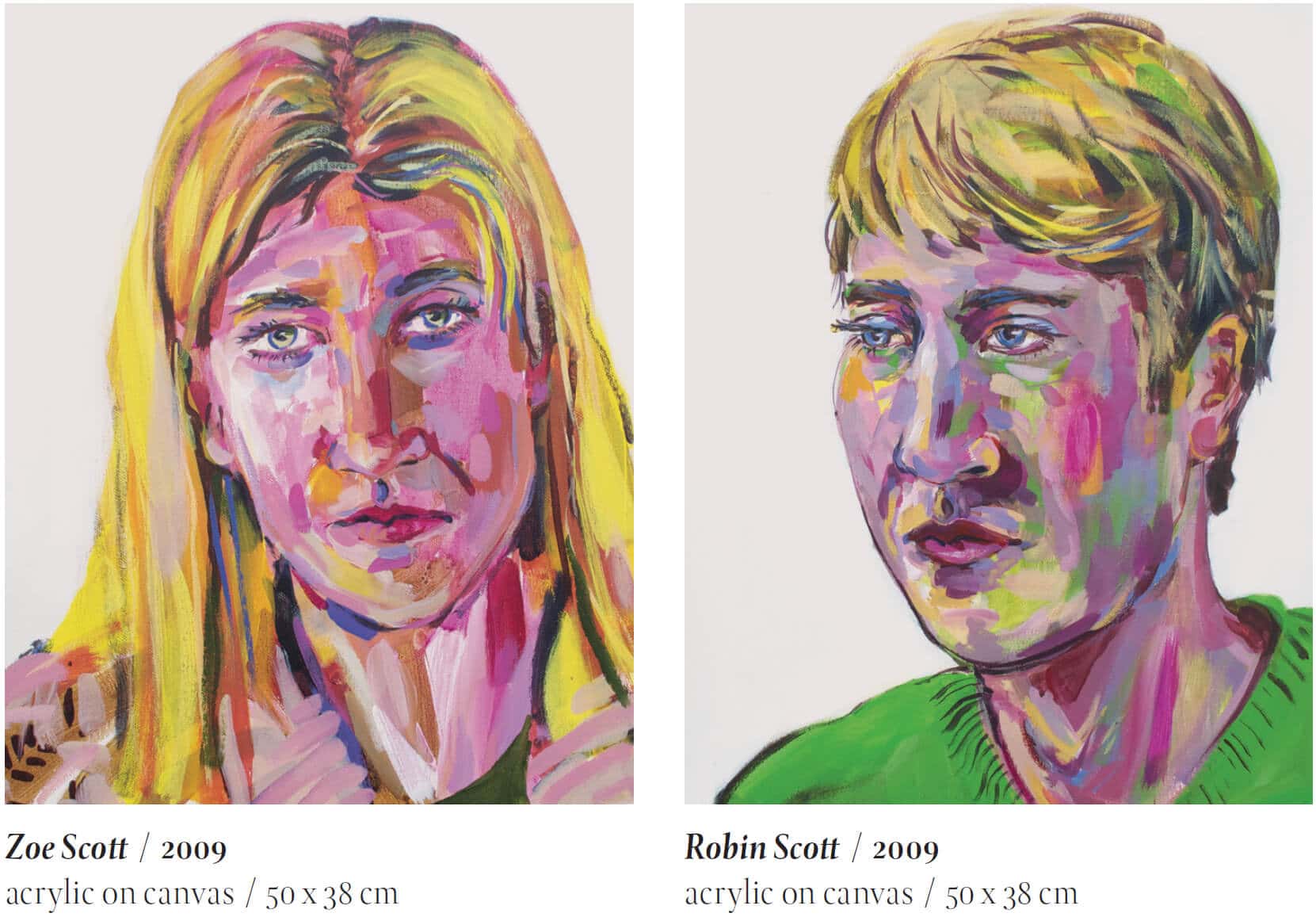
The pioneering moderns in Scotland likewise produced portraits. In the 1920s and 1930s William Johnstone, renowned as a key figure in the development of abstraction, painted portraits of both Hugh MacDiarmid and Francis George Scott. William McCance, also associated with the leaders of the Scottish Renaissance, painted portraits influenced by the Vorticists as well as the Expressionists. In a very different mode, James Cowie’s intense, classical portraits of his school pupils and Edward Baird’s similarly closely-observed portraits of the novelist Fionn MacColla and the architect George Fairweather demonstrate a painting style that eschews the French influenced modernism of the Colourists. Ian Fleming’s double portrait of Robert Colquhoun and Robert MacBryde which hung for many years in the east corridor of the Mackintosh building was another influential statement about portraiture and modern art. Taken together, we can clearly recognise that a significant and rich modern portrait tradition had been established in Scotland by the end of the 1930s. Of those painters … McCance, Cowie, Baird, Fleming, Colquhoun and MacBryde, all studied at the Glasgow School of Art.
What Scotland seemed to lack at that time were women artists of the calibre of Frida Kahlo or Paula Modersohn-Becker, but recent research has shed new light on Bessie MacNicol, Agnes Miler Parker and Mary Cameron, all gifted artists who painted portraits. In this context special mention should be made of Dorothy Carleton Smyth who would have become the first female Director of Glasgow School of Art in 1933 had she not tragically died of a brain haemorrhage before she could take up the post. Her Self-portrait, 1921 remains a challenging and important work.
After the Second World War Scottish painting was dominated by the Edinburgh School – Gillies, Redpath, Maxwell, McTaggart, Cumming, Houston, Blackadder – and their preferred subject matter was landscape and still life, not people or portraits. As students at Edinburgh College of Art John Bellany and I quickly realised we would have to re-invent portraiture for ourselves. We were assisted in this task by many of the great Edinburgh Festival exhibitions of the period – Die Brucke, Delacroix, Corot, Soutine and Modigliani, and Derain.

The Kokoschka exhibition in 1962 and the Beckmann exhibition in 1965, both at the Tate Gallery in London were also crucial. After a study visit to Germany in 1967, taking in Berlin, Dresden, Leipzig and Weimar we were finally ready.
Bellany went on to create what is possibly the most important body of self portraits in recent times, often haunted visions, remarkable in their psychological intensity and fantastic symbolism.
Much has been written about the re-birth of figuration in Glasgow in the 1980s, in many ways a re-connecting with the strong tradition of figuration that had emerged earlier in Glasgow in the 1920s and 1930s.
Throughout the twentieth century Glaswegian artists maintained a dialogue with both European modernism and popular art, perhaps best exemplified by the literary movement that developed in the art school in the 1950s and 1960s with Alasdair Gray, John Byrne and Liz Lochhead all emerging from the painting studios. Gray and Byrne, of course became famous portraitists. The modernist aversion to ‘illustration’ and ‘narrative’ which prevented so many artists from exploring the human figure had little effect in Glasgow. Instead, directness of expression, accessibility and communication were paramount and the influence of big city life, its humour and humanity provided an endless source of subject matter and inspiration.
The catalyst for the cultural explosion in the 1980s was the failed independence referendum of 1979. The artistic resistance that emerged in its wake was epitomised by the completion of Alasdair Gray’s great novel Lanark, ‘unblocked’ as he explained by the realisation that culture would now have to do what politics had failed to deliver. And Steven Campbell in the same vein, speaking of his fellow ‘New Image’ painters said ‘Until us, no one ever thought you’d be inspired to paint by your own country’.
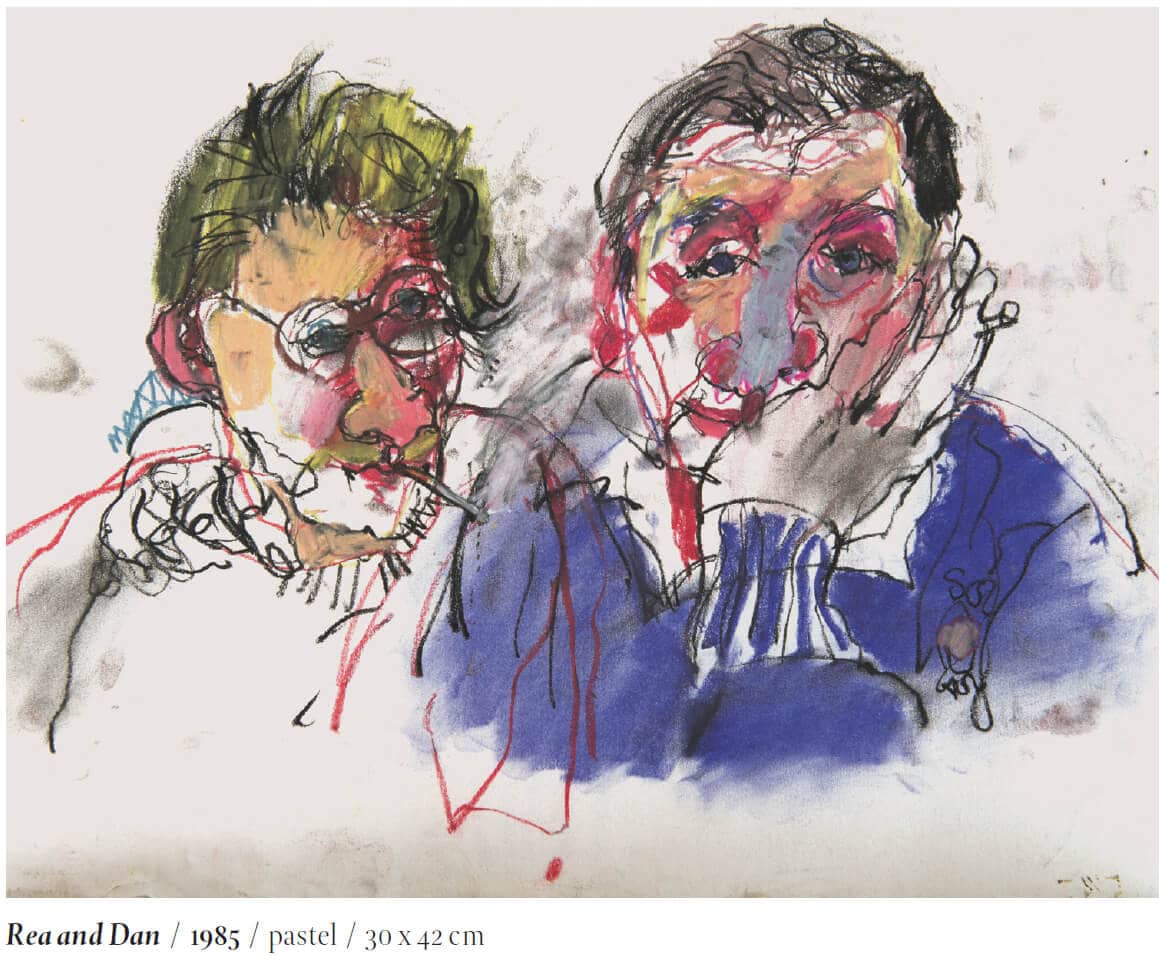
Visual artists exploded with activity as though 1979 had bitten their collective bum. They were already far from the London mainstream in being figurative. Scots art schools still unrepentantly followed the style of Beckmann or Dix; a new but more confident Weimar. Peter Howson depicted the ‘walking wounded’ of the west of Scotland working class.
Ken Currie was as political as Diego Rivera in his panorama’s of militant workers and industrial decline; Kate Whiteford found new ways to bring Celtic and Pictish symbols into modern life, while Gwen Hardie interpreted a Scottish view of universal obsessions: religion, life and death.²
The main players amongst the ‘New Image’ painters – Steven Campbell, Adrian Wiszniewski and Ken Currie – all came late to portraiture. It wasn’t something they involved themselves with as students. On the other hand, both Alison Watt and Rosemary Beaton actively pursued portraiture during their student years while their contemporaries, Helen Flockhart, Alison Harper and Debbie Lee, explored the connections between myth and reality.
Watt’s early portraits were cool and whimsical, Beaton’s energetic and spontaneous, but conceived with clarity and boldness. Refusing to obey rules laid down by someone else Beaton has gone from strength-to-strength in her now long career as a portrait painter, her colours more vivid than before and her painterly touch more flowing and assured. She has worked hard and consistently and her body of work is a notable contribution to the Scottish portrait tradition.
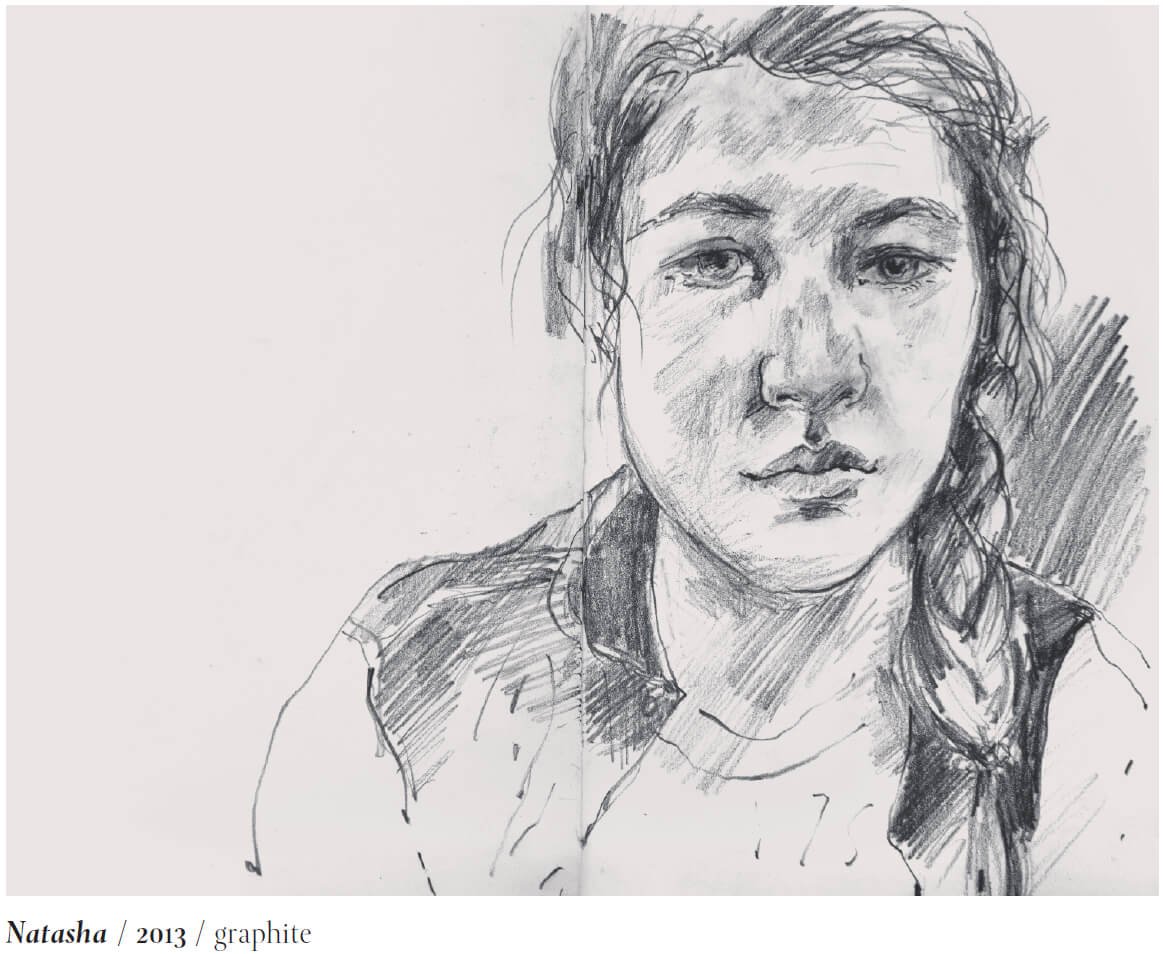
The image of the human face or portrait has taken on a new dimension over the past century. Transformed by photography, the cinema, television, new technologies and world wide communications, the face has been scrutinised as never before. We now are confronted with everincreasing speed by so many images that we look at all the time, but we no longer have the means or the skills any more to see.
More than ever before the concerns E.H. Gombrich raised in his essay ‘The Mask and the Face’ – namely that the truly enquiring portrait painter must see past the transient and the superficial and uncover the permanent and the profound have taken on a new urgency. Perhaps the only valid question now worth asking is – can the artist retrieve and re-invent the image and make it meaningful once again?
1. John Berger, ‘No More Portraits’, The Moment of Cubism and Other Essays (Weidenfeld & Nicholson, 1969) 2. Christopher Harvie and Peter Jones, The Road to Home Rule: Images of Scotland’s Cause (Polygon, 2000)